
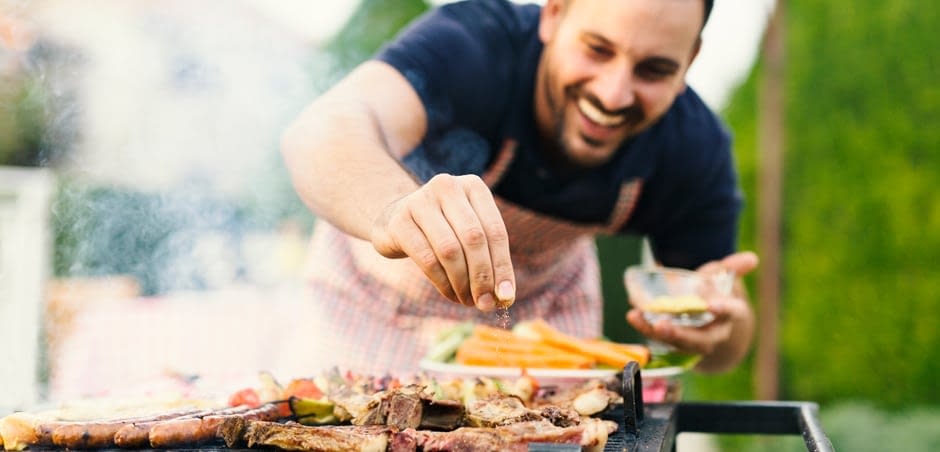
Grilling food outside is a classic summer pastime but it’s not without risk. According to the National Fire Protection Association (NFPA), grills are involved in more than 10,000 home fires per year. This guide helps explain common grilling risks, shares best safety practices and outlines the steps you can take in an emergency.
Where should you place your grill?
Placing your grill in an open, well-ventilated area away from your home is critical to a safe grilling experience. Your grill should also sit on a flat, level surface in a space far from pets or small children. Keep these tips in mind as you determine the best spot for your grill:
- Keep it outside. Propane and charcoal grills should always be used outdoors, never inside or even in a garage.
- Find a level fireproof spot. Using your grill on an incline could cause it to roll or tip over, and wooden decks can easily catch fire.
- Give it space. Avoid placing your grill near your home and deck railings, or underneath eaves and awnings.
- Watch it carefully. Never leave your grill unattended.
- Don’t move a lit grill. After your grill is lit, don’t attempt to move it to another location. Moving a lit grill risks burning yourself or others.
How to stay safe using a gas grill
Whether powered by propane or natural gas, gas grills demand that you pay special attention to critical components such as the fuel lines, connections and burners. Even before turning on the gas, you’ll want to take notice of your grill’s condition and make sure both the gas source and the grill itself are in good shape, as damage can cause fires or other problems.
Here’s what you’ll want to look out for:
- Check for leaks. At the start of the season, ensure there are no gas leaks by applying a soapy water solution to your gas tank and hose connections. If you see bubbles rising from any connection points or smell gas, turn the grill off and get it serviced before using.
- Watch out for rust. Remove surface rust on grill grates before you start cooking with the grill. If any parts such as the burners or tanks are heavily rusted, get them replaced.
- Open the lid. Make sure the lid is open when lighting your gas grill. A closed lid can allow gas to build up inside the grill, which can lead to a flash burn.
- Keep your distance. When lighting your burners, don’t lean over the grill..
- Turn off the gas. After you’ve finished cooking, remember to turn off the propane — at the grill and the tank shutoff. If you ever smell gas after the grill has been turned off, call your local fire department.
How to stay safe using a charcoal grill
Charcoal users swear by the distinct, smoky flavor it gives to food, but these grills can be a little more complicated and have a slightly different set of safety rules than their gas counterparts. Since they rely on heating briquettes until they become ashy gray with a glowing red outline, charcoal grills can be difficult to control the exact temperature. Using this type of grill also requires some patience, as charcoal takes about 20 minutes to reach cooking temps and won’t turn off immediately once you’re done.
To start fires, many grillers use lighter fluid. But this method requires caution, as it must be designed specifically for a charcoal grill and not added once you’ve lit the charcoal. Here are a few more safety items you’ll want to keep in mind when using a charcoal grill:
- Consider a safer fire starter. Safer alternatives to lighter fluid include metal chimney starters, which use newspaper as a fire source, and solid fire starters made from flammable wax or wood. Electric starters work well, too, but don’t use one in wet weather.
- Go easy on the lighter fluid. Let the charcoal soak up the fluid before lighting. And never use gasoline or other flammable liquids.
- Control your vents. Charcoal grills need oxygen to burn. So keep your vents open when cooking and close them to extinguish the flame.
- Let it cool. Give your grill enough time to cool down completely before covering it.
- Safely dispose of coals and ashes. Before cleaning out your ashes and charcoal, let them cool for 48 hours. If you need to clean out your grill sooner than that, wrap the ashes in aluminum foil and soak them with water. Then, dispose of them in a non-combustible container.
How to put out a grill fire
Grill fires are different from regular fires. They are essentially the same as a grease fire that occurs in your kitchen. Because of the oil that’s involved, spraying it down with a hose is not a good idea. Instead, you’ll want to follow these steps:
- Never use water. Using water to extinguish the flames will just lead to an explosion of burning grease.
- Use a fire extinguisher. The best way to put out a grill fire is by using a multi-purpose fire extinguisher. Keep it nearby and make sure it’s been tested and inspected recently.
- Smother the flame. If you don’t have a fire extinguisher on hand, smother the flame by cutting off the supply of oxygen. You can do this by closing the lid and grill vents. Spreading baking soda on the flame can also help put it out.
How to store and maintain your grill
Proper storage and maintenance is essential to keeping your grill in a safe state. In fact, most grill fires can be prevented with a little bit of maintenance. Here is what you’ll want to pay attention to:
- Keep drip trays and grill grates clean. If your grill has a drip pan or tray, get in the habit of regularly cleaning out the fat, grease and oil that collects there. And brush off your grates to help prevent a possible fire hazard while keeping your grill from rusting.
- Use a cover. Use a weatherproof cover to help keep dirt and moisture out during wet and snowy weather.
- Store propane safely. When your grill is out of use for long periods of time, it’s best to fully disconnect the propane tank. If you decide to store your grill indoors for the winter, be sure to leave the gas tank outside, as propane should never be stored indoors.
What to do in an emergency
The same rules for any emergency still apply: stay calm, provide basic first aid and comfort others while help arrives. Should a grill fire specifically occur, here are the steps you’ll want to take:
- Use a safe and trusted method to attempt to stop the fire. Using a multi-purpose fire extinguisher, try to put out the flames as quickly as possible.
- Call 911. If you can’t put out the fire, call for help immediately. House fires spread quickly, so the faster you get professional help, the less damage it will do.
- Treat any injuries. Each year, nearly 20,000 people visit an emergency room because of grill-related injuries. For minor burns, run cool water over the area, cover it with a sterile non-adhesive bandage and take an over-the-counter pain reliever. For more serious injuries, see a doctor immediately.
- Assess the property damage. After the fire is out and any injuries have been treated, evaluate how much your property has been damaged. Take photos to document the damage. Your Insurance agent can help you decide whether to file an insurance claim and guide you through the claims process if you do.
FAQs
Besides a fire, what other risks can a grill pose?
A grill placed in a poorly ventilated area could result in carbon monoxide poisoning, while those placed too close to homes can melt vinyl siding—even if a fire doesn’t break out.
What if I can’t get a burner to light?
If you can’t get a burner to light, turn off the grill and wait at least five minutes before trying again. Also be sure to check if the propane tank is empty or if the valve is closed.
How often should I clean my grill?
You’ll want to brush or scrape off the grates on a gas grill each time you’re finished cooking. You should also heat the grill to burn off excess food. Deep cleaning should be performed once or twice a year, while drip pans should be cleaned every couple of uses.
For charcoal grills, you need to remove all leftover charcoal and ash after each use and also deep cleaned at least once or twice per year depending on your use.
What food safety rules should I keep in mind?
To ensure food safety and minimize your risk of foodborne illness, prevent cross-contamination by using different trays and utensils for raw meats and vegetables. Meat should also reach safe internal temperatures:
- Poultry should reach 165 degrees
- Whole cuts of beef, pork and lamb: 145 degrees.
- Ground beef, pork and lamb: 160 degrees
- Fish: 145 degrees
And never leave food sitting our in warm weather for more than an hour.
Protect what matters most
As a homeowner, you can take steps to ensure both your house and family are well protected. In addition to following these grilling safety tips, make sure you also have the right homeowners insurance coverage. For a fast, free coverage check, contact an agent in your neighborhood today.